

Views: 0 Author: Site Editor Publish Time: 2026-08-13 Origin: Site


High-voltage transmission and distribution networks face constant threats from environmental contamination. Moisture and pollution combine to compromise insulation integrity across the grid. Traditional ceramic and glass insulators require labor-intensive maintenance. Crews must perform routine washing and greasing to prevent leakage currents. These outdated practices attempt to stop pollution-induced flashovers but often risk severe grid downtime. Specifying a hydrophobic silicone rubber insulator directly addresses these failure points.
We evaluate the technical mechanisms of hydrophobicity in modern polymeric materials, examining material formulations, mechanical characteristics, lifecycle longevity, and implementation risks. Engineers and procurement teams will learn how to optimize grid reliability through strategic material selection. Understanding the dynamic properties of silicone rubber allows utilities to eliminate outdated maintenance routines and secure high-voltage infrastructure against harsh environmental conditions.
Active Pollution Resistance: Unlike traditional materials, silicone rubber transfers its hydrophobic properties to adhering dirt and salt, maintaining high surface resistance even in heavily polluted coastal or industrial environments.
Dynamic Recovery Capabilities: Silicone rubber can temporarily lose hydrophobicity under severe stress (corona discharge, continuous heavy rain) but possesses a unique chemical ability to recover it over time, even under repeated pollution exposure.
Total Cost of Ownership (TCO): While initial procurement costs may vary compared to porcelain, the elimination of routine washing and superior flashover resistance significantly lowers lifecycle costs.
Specification Imperatives: Selecting between High-Temperature Vulcanized (HTV) solid insulators and Room-Temperature Vulcanized (RTV) coatings requires aligning material mechanical limits and specific formulations with environmental severity and existing infrastructure.
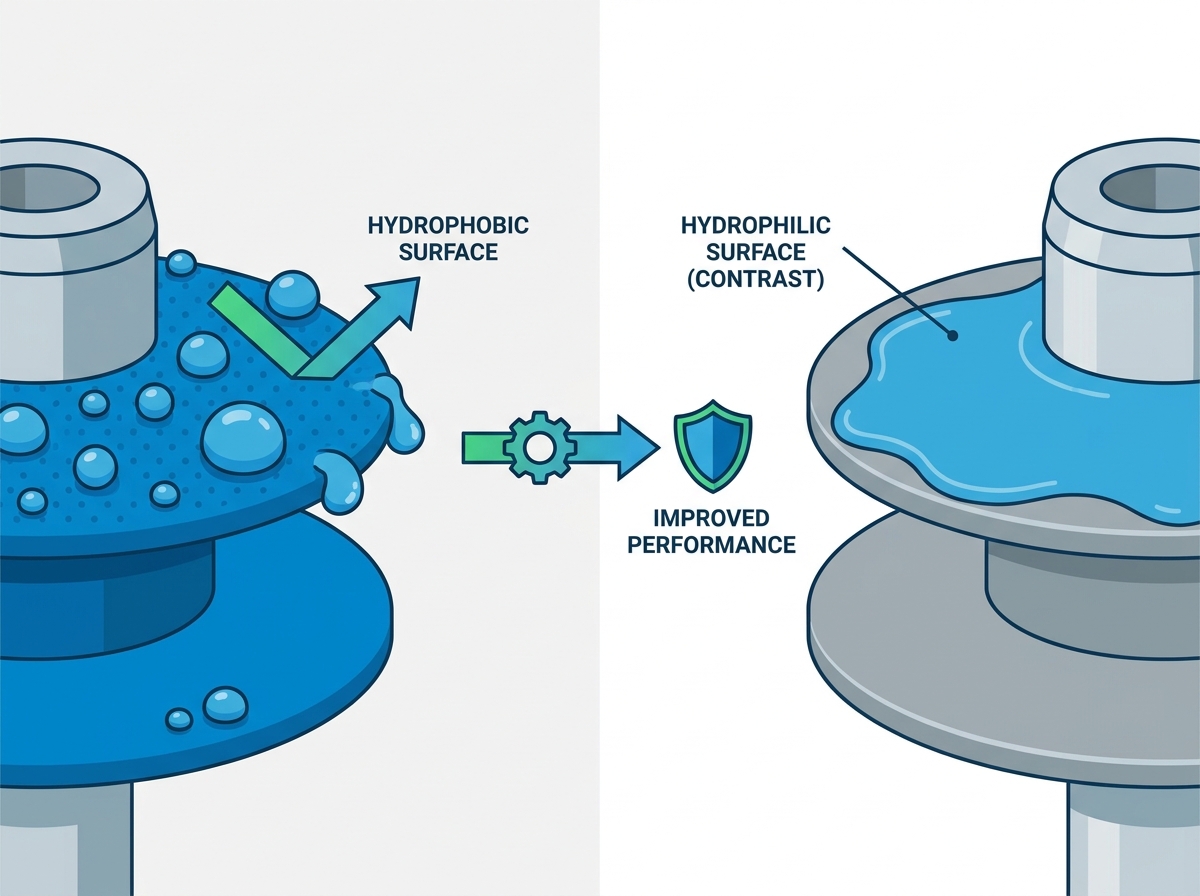
Polymeric silicon possesses a naturally low surface energy. This physical characteristic dictates exactly how water interacts with the insulator surface in the field. When rain or fog contacts the material, the water cannot spread flat. The high contact angle forces the moisture to bead into isolated droplets. This beading action prevents the formation of a continuous conductive water film. Without a continuous film, electrical current cannot easily track across the surface. This fundamental physics principle protects the insulator from initial leakage currents during wet weather conditions. Field observations consistently show that even during heavy downpours, the water simply rolls off the sheds, taking loose surface dirt with it.
Engineers measure this property using the contact angle. A surface is considered hydrophobic when the contact angle of a water droplet exceeds 90 degrees. High-quality silicone rubber often exhibits contact angles well above 100 degrees. This high angle means the droplet barely touches the surface, minimizing the area available for electrical conduction. Traditional porcelain and glass have high surface energies, causing water to sheet and create an immediate conductive path.
The true advantage of silicone rubber lies in its dynamic chemical structure. The bulk material contains Low Molecular Weight (LMW) siloxanes. These highly mobile polymer chains continuously migrate from the interior to the surface layer. When pollutants like dust, salt, or industrial emissions settle on the insulator, the LMW siloxanes diffuse directly through the contamination. They encapsulate the adhering particles entirely.
This transfer mechanism renders the pollution layer itself completely water-repellent. If you inspect a silicone insulator near a cement plant, you will see a thick layer of grey dust. However, if you spray water on that dust, it still beads up. Traditional porcelain and glass cannot perform this chemical transfer. When dirt accumulates on ceramic, it absorbs moisture and immediately becomes a conductive hazard.
Silicone rubber operates in extreme environments that constantly test its limits. Severe corona discharge, heavy UV radiation, or continuous torrential rain can temporarily strip the surface of its protective siloxanes. The material briefly becomes hydrophilic. However, the bulk silicone acts as a massive reservoir. Once the severe stress subsides, LMW siloxanes resume their outward migration. The insulator regains its full water-repellent properties.
This recovery timeline varies based on ambient temperature and specific material formulation. In warm climates, recovery might take only 24 hours. In freezing conditions, the diffusion slows down, potentially taking several days. Utilities must account for this recovery window when designing lines in areas prone to continuous, multi-day storms followed immediately by heavy pollution events.
High-voltage lines often run through areas with relentless contamination cycles. Seasonal dust storms deposit thick layers of particulate matter. Coastal salt fogs coat surfaces in highly conductive brine. A high-quality silicone insulator handles these continuous cycles effortlessly. The diffusion process sustains electrical insulation properties over decades.
Even as old pollution layers wash away and new layers form, the LMW siloxanes continue to migrate and encapsulate the new threats. This cyclic recovery ensures long-term operational stability without manual intervention. Field data from lines operating in the Middle East and coastal South America demonstrate that silicone rubber maintains its transfer capabilities even after 15 years of continuous exposure to heavy salt and sand.
Continuous water films allow electrical current to escape the conductor and travel across the insulator surface. This leakage current heats the surface unevenly. Localized heating evaporates the moisture, creating dry bands across the wet surface. High voltage then arcs across these dry bands. This dry-band arcing causes severe localized heating, leading to material tracking and erosion.
Hydrophobicity prevents the initial continuous water film from forming. By keeping the water in isolated droplets, the material stops this destructive chain reaction before it begins. Linemen rarely see the severe tracking on silicone that they routinely observe on neglected porcelain strings. Stopping dry-band arcing extends the physical life of the weather sheds and prevents catastrophic line drops.
Silicone rubber significantly outperforms porcelain and glass in polluted environments. The pollution withstand voltage remains exceptionally high even in heavy industrial zones. Traditional insulators experience sharp drops in flashover voltage as contamination builds up. Polymeric silicon maintains its dielectric strength because the pollution layer remains non-conductive when wet.
Insulator Material | Clean Wet Flashover Voltage (kV) | Heavy Pollution Wet Flashover Voltage (kV) | Performance Drop (%) |
|---|---|---|---|
Standard Porcelain | 350 | 120 | 65% |
Toughened Glass | 340 | 115 | 66% |
Silicone Rubber (HTV) | 360 | 290 | 19% |
High-salinity coastal regions benefit immensely from this superior performance. Utilities can maintain stable grid operations without over-insulating or specifying excessively long creepage distances. This allows for more compact tower designs and lower overall structural loads.
Different environments impose unique stresses on outdoor insulation. Coastal environments demand rapid hydrophobicity transfer. Salt fog creates immediate, highly conductive threats that require fast siloxane diffusion to neutralize. Formulations designed for coastal regions prioritize high mobility of LMW chains.
Industrial zones present different challenges. Cement plants, steel mills, or mining operations produce heavy particulate accumulation. This thick dust tests the volumetric limits of LMW migration. Formulations for these areas must contain a larger reservoir of free siloxanes to penetrate thick, caked-on dirt. Engineers must evaluate the dominant pollution type to specify the correct silicone blend and shed profile. Alternating shed designs often work best in heavy ice and industrial dust, while uniform sheds perform well in coastal rain.
Sustained hydrophobicity ensures long-term dielectric strength. A well-specified insulator operates reliably for 20 to 30 years in the field. However, aging factors require careful monitoring. UV degradation slowly alters the surface chemistry. Mechanical stress from wind and ice loads tests the core strength.
The continuous migration of LMW siloxanes mitigates surface aging, but the bulk material must remain structurally sound. High-quality manufacturing ensures the insulator maintains both its electrical and mechanical integrity throughout its intended lifespan. Poorly manufactured silicone can become brittle, leading to shed tearing during high winds. Utilities must demand accelerated aging test data from manufacturers before approving a product for network-wide deployment.
High-Temperature Vulcanized solid insulators dominate new transmission line construction. Manufacturers bond HTV silicone directly to a central fiberglass reinforced plastic (FRP) core. This composite structure offers immense structural integrity and high tensile strength. The HTV silicone acts as the weather shed, protecting the core from moisture and UV damage.
Utilities deploy HTV composite insulators for complete infrastructure upgrades and new substation builds. The solid construction provides a permanent, low-maintenance solution for high-voltage applications. The manufacturing process involves injecting the HTV rubber into a mold under high heat and pressure, ensuring a seamless bond with the FRP rod. This seamless interface prevents moisture ingress, which is the primary cause of internal brittle fracture in composite insulators.
Room-Temperature Vulcanized coatings provide a highly effective retrofitting solution. Maintenance crews spray RTV silicone directly onto existing ceramic or glass insulators. This upgrades the asset's performance without requiring full replacement or extended outages. The RTV coating cures in the ambient air, forming a hydrophobic layer over the traditional material.
This approach extends the life of aging infrastructure. It provides the pollution resistance of silicone while utilizing the existing mechanical strength of the underlying porcelain or glass. Surface preparation dictates the success of an RTV application. Crews must thoroughly wash and dry the ceramic surface before spraying. Any residual grease or dirt will cause the RTV coating to peel prematurely.
Fillers dictate the ultimate performance of the silicone rubber. Alumina Trihydrate (ATH) is the most critical additive. ATH improves tracking and erosion resistance. During severe arcing, ATH releases water vapor, cooling the surface and quenching the arc. However, filler ratios impact the mechanical characteristics. High filler content can reduce tensile strength and flexibility.
The insulator must withstand high wind, heavy ice loads, and seismic activity. Manufacturers must balance ATH content to achieve optimal electrical protection without compromising the physical durability of the weather sheds. Engineers verify these mechanical characteristics through specific field-simulated tests:
Cantilever Load Testing: Verifies the insulator can withstand lateral forces from wind and line tension.
Tensile Load Testing: Ensures the crimped end fittings will not pull away from the FRP core under heavy ice loads.
Torsion Testing: Confirms the sheds and core resist twisting forces during installation and galloping conductor events.
Dye Penetration Testing: Checks the integrity of the seal between the silicone housing and the metal end fittings.
Selecting between HTV and RTV requires a strict evaluation of project parameters. The decision framework relies on expected lifespan, mechanical strength requirements, and installation downtime.
Parameter | HTV Solid Insulators | RTV Silicone Coatings |
|---|---|---|
Structural Role | Primary load-bearing insulation | Surface protection only |
Installation Downtime | Requires complete line de-energization and hardware replacement | Can be applied during shorter outages; requires specific weather to cure |
Expected Lifespan | 20 to 30+ years | 10 to 15 years (requires eventual re-coating) |
Primary Use Case | Greenfield construction, major line upgrades | Retrofitting existing porcelain/glass in high-pollution areas |
Traditional insulators demand constant attention. Utilities deploy helicopters for live-line washing or send crews to manually apply silicone grease. These practices drain operational resources and require extensive planning. Polymeric insulators eliminate these requirements entirely. The active pollution resistance of the material means the insulators clean themselves during natural rain events.
By removing washing and greasing from the maintenance schedule, utilities free up labor hours and equipment for more critical grid modernization tasks. A utility managing a 500kV line through a coastal desert can spend thousands of man-hours annually just washing glass strings. Replacing those strings with composite materials stops that labor drain immediately. The operational efficiency gained allows maintenance managers to reallocate budgets toward predictive monitoring and substation upgrades.
Porcelain shatters easily upon impact. Polymeric silicon is inherently lightweight and shatter-proof. This durability drastically reduces breakage rates during transport over rough terrain. Crews can handle the materials more efficiently during installation without fear of chipping the sheds. A dropped porcelain bell is garbage; a dropped composite insulator usually just needs a quick wipe down.
Furthermore, composite insulators offer excellent resistance to external vandalism. Rock strikes or ballistic impacts that would destroy a glass string merely dent the silicone rubber. The FRP core remains protected, allowing the line to remain energized until scheduled maintenance. In rural areas where insulators frequently become targets for vandalism, switching to polymeric materials prevents unexpected outages and emergency truck rolls.
Standardizing on a single advanced material simplifies inventory management across a utility network. Instead of stocking various grades of porcelain and specialized washing equipment, utilities can streamline their warehousing. Standardized composite insulators allow for highly predictable maintenance planning.
Engineers can model aging and replacement cycles with greater accuracy. This network-wide standardization improves overall grid resilience and ensures rapid deployment of replacement parts during severe weather emergencies. When a hurricane tears through a coastal grid, having a standardized stock of lightweight, easy-to-install composite insulators accelerates the restoration process significantly compared to hauling heavy porcelain crates into muddy, inaccessible right-of-ways.
Continuous corona discharge oxidizes the silicone surface. Extreme, prolonged wetting from torrential storms overwhelms the water repellency. Under these conditions, the material temporarily loses its electrical insulation properties. Mitigation requires careful engineering at the specification stage.
Engineers must specify appropriate creepage distances based on the maximum expected contamination. Additionally, utilizing corona rings minimizes electrical stress concentrations at the hardware fittings. Proper grading ring placement prevents the continuous discharge that depletes the surface siloxanes. If a utility installs a 400kV composite insulator without the correct corona rings, the resulting electrical stress will destroy the silicone housing near the energized end within a few years.
If dry-band arcing occurs during periods of hydrophobicity loss, the material faces irreversible damage. The intense heat breaks down the polymer chains, leading to tracking and erosion. Mitigation demands strict procurement specifications.
Utilities must mandate ATH (Alumina Trihydrate) fillers or similar advanced additives. These fillers enhance tracking and erosion resistance, ensuring that even if arcing occurs, the material will not degrade into a conductive path that causes a permanent line fault. Procurement documents should explicitly state the required percentage of ATH filler and demand third-party laboratory verification before accepting a shipment.
Prolonged exposure to harsh environments impacts the mechanical characteristics of polymeric silicon. UV radiation causes surface embrittlement over decades. Abrasive sandstorms erode the weather sheds, reducing the creepage distance. Mitigation involves specifying formulations optimized for the specific environmental severity.
High-salinity coastal formulations resist chemical degradation. Utilities must also implement routine visual inspections using high-powered optics or drones to identify mechanical wear before it compromises the core. Drone inspections allow maintenance teams to spot chalking, crazing, or bird damage on the upper sheds without climbing the tower.
Silicone formulations vary wildly among manufacturers. Poorly mixed formulations fail prematurely in the field. Mitigation requires strict adherence to international testing standards. Procurement teams must specify IEC 62073 compliance for all polymeric insulators.
Engineers should utilize the STRI hydrophobicity classification guide during factory acceptance testing and field inspections. Grading surfaces from HC1 (highly hydrophobic) to HC7 (completely hydrophilic) ensures the supplied materials meet the exact performance requirements. Utilities should never accept composite insulators based on visual inspection alone; rigorous material science documentation is mandatory.
Transitioning to a hydrophobic silicone rubber insulator requires careful planning and strict adherence to material specifications. To implement these solutions effectively and secure your high-voltage infrastructure, execute the following steps:
Audit your network's specific pollution severity to determine the exact creepage distances and ATH filler formulations required for your environment.
Request documented STRI classification test data and IEC 62073 compliance records from all potential manufacturers before issuing purchase orders.
Establish a routine visual inspection program using drones to monitor long-term mechanical wear, surface aging, and corona ring alignment.
Update your procurement specifications to mandate specific filler ratios and accelerated aging test results for all new composite insulator purchases.
A: Continuous heavy rain, severe corona discharge, extreme UV exposure, and biological growths can temporarily deplete the surface of Low Molecular Weight (LMW) siloxanes. This strips the material of its water-repellent properties until the bulk material can diffuse new siloxanes to the surface.
A: The typical recovery window ranges from a few hours to a few days. The exact timeline depends heavily on ambient temperature, the specific material formulation, and the severity of the environmental stress that caused the initial loss.
A: High-quality formulations handle repeated contamination through cyclic recovery. The material sustains LMW siloxane diffusion over decades. Even as new dirt or salt layers accumulate, the bulk material continues to push siloxanes outward to encapsulate the pollutants.
A: The STRI guide is a visual grading system used for field and lab assessments. It classifies the insulator surface from HC1, which is highly hydrophobic with distinct water droplets, down to HC7, which is completely hydrophilic with continuous wet films.
A: Low Molecular Weight (LMW) polymer chains naturally migrate from the interior of the silicone rubber to the surface. When pollution settles on the insulator, these highly mobile chains diffuse into the dirt and salt, encapsulating the particles and making the pollution layer water-repellent.
A: No. The temporary loss of surface electrical properties does not immediately equate to long-term bulk mechanical strength degradation. The fiberglass core and the structural integrity of the weather sheds remain intact even if the surface temporarily becomes hydrophilic.
A: HTV composite insulators provide permanent structural permanence for new builds and major upgrades. RTV coatings offer excellent retrofitting utility for extending the life of existing porcelain or glass assets without requiring a complete hardware replacement.


